Slavic Languages & Literatures
- The Ukrainian Studies Initiative is pleased to announce the first competition for Ukrainian Studies scholarships! Thanks to the assistance of the Ukrainian Studies Fund and the generosity of the Ukrainian community in Chicago, we can now offer $1000... Read full story
Events
More News
- The growth of Ukrainian Studies on campus caught the attention of the Daily Illini. You are invited to read the feature...
- The annual Slavic talent show and awards ceremony on April 30 celebrated the achievements of our students. Once again this year, a large number of awards were won by Slavic language students, from national awards and...
- The Slavic Department was recently featured in the student-produced news feature program "The Quad." Student journalist Aaron Anastos produced the segment, featuring interviews with Slavic major Louise Shannon and Professor...
SLAV 452/CWL 453 Eastern Europe and Postcoloniality SPRING 27
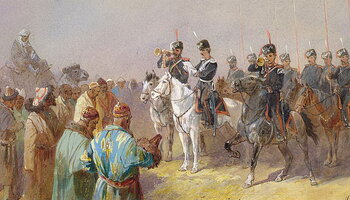
This course examines historical and scholarly debates about the (post)coloniality of the Central and East European regions. In the past few decades, scholars and laymen alike have increasingly borrowed the language and concepts of postcolonial studies to reframe Central and Eastern Europe’s multiple, overlapping legacies of imperial rule. In this course, students will read and analyze new theoretical and empirical studies about the applicability of the colonial and postcolonial paradigms to the region’s past and present. Areas of particular emphasis include Central Asia, the Caucasus, the Balkans, Ukraine, and Poland. Prof. Wright
RUSS 465 Jewish Culture in the Russian Empire
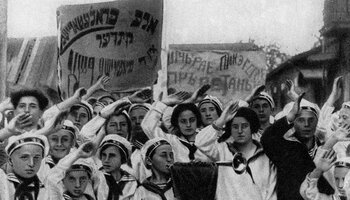
This course explores what Jewish culture was in the Russian Empire and the Soviet Union and why it was significant. As Jews across Eurasia witnessed epochal shifts in the structure of their communities during the 19th and 20th centuries, many turned to culture as a vehicle for envisioning new modes of Jewishness. Through literature, visual art, and film, they sought to interpret social transformations and fundamentally alter the fabric of Jewish life in Eastern Europe and beyond. During the semester, we will examine how writers and thinkers such as Sholem Aleichem, Isaac Babel, Yente Serdatzky, and Joseph Brodsky approached some of the defining issues of the Jewish (and human) experience: language, sexuality, political organization, religious belief, and migration. We will think through the relevance, limitations, and legacies of their ideas in our current moment. No Russian required. Prof. Arenstein
RUSS 115: Intro to Russian Culture
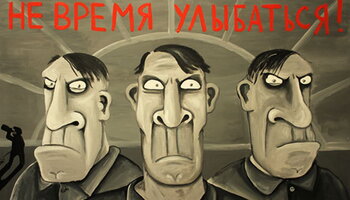
What is Culture? What is the difference between Culture and culture? How does C(c)ulture relate to the state? What role does the state play in shaping cultural production? This semester, we will delve into these complex questions, focusing on contemporary Russian Culture. The course will concentrate on the last few decades of Russian C(c)ulture and its development. By analyzing Russian cultural production, including literature, music, visual art, film, and performative art, we will seek to determine the intricate relationship between art and the state and vice versa. By the end of the course, you should have a deeper understanding of contemporary Russian C(c)ulture, be able to effectively discuss different cultural figures and productions, and evaluate various artistic media. Prof. Dzyadevych
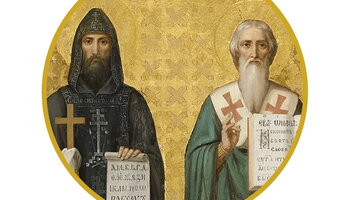
LCTL 101 & 201 First-Year and Second-Year Bulgarian
Students in 101 will learn to use the Cyrillic alphabet, acquire foundational vocabulary and grammatical structures, and engage in simple conversations on familiar topics such as personal information, daily routines, and social interactions. Cultural topics are integrated throughout the course to provide insight into contemporary Bulgarian society, traditions, and cultural practices. Students in 201 will work with more complex texts, participate in extended discussions, and develop greater control over stylistic and register differences. The course also introduces elements of sociolinguistic awareness, helping students understand variation in language use across contexts. (Courses may appear later as BULG 101 & 201) Prof. Dimitrova
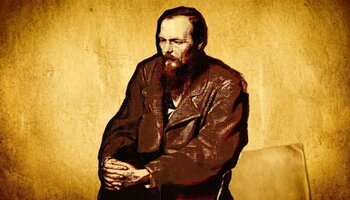
RUSS 322 Dostoevsky
Introduction to the major works of Fyodor Mikhailovich Dostoevsky. White Nights. Notes from Underground. The Idiot. No Russian required. Prof. Sobol
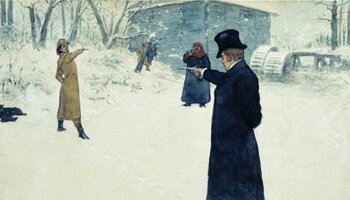
RUSS 220 Golden Age of Russian Literature
Survey of Russian literature in the long 19th century; romanticism, realism, nationalism, orientalism, empire; writers may include Pushkin, Gogol, Lermontov, Pavlova, Turgenev, Dostoevsky, Tolstoy, Chekhov, and others; reading and discussion in English. This course satisfies the General Education Criteria in Fall 2026 for: Advanced Composition; Humanities – Lit & Arts. Prof. Cooper